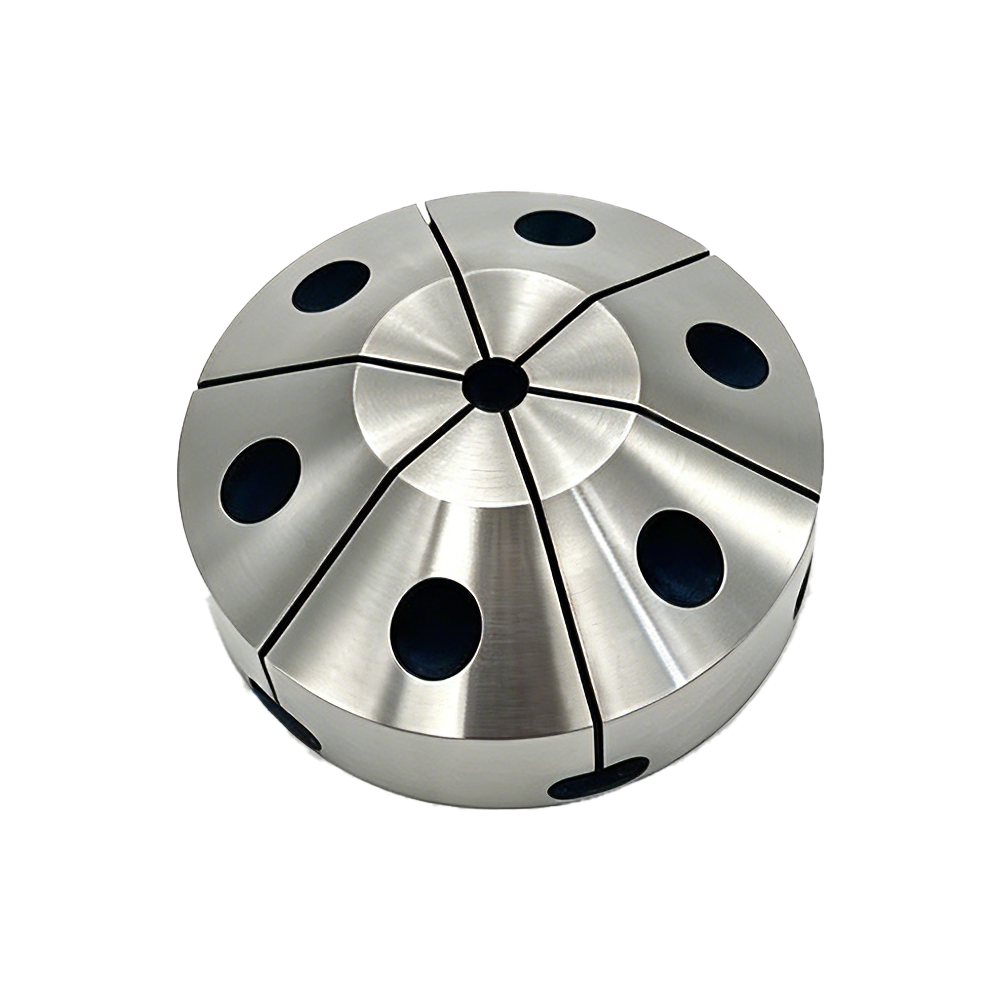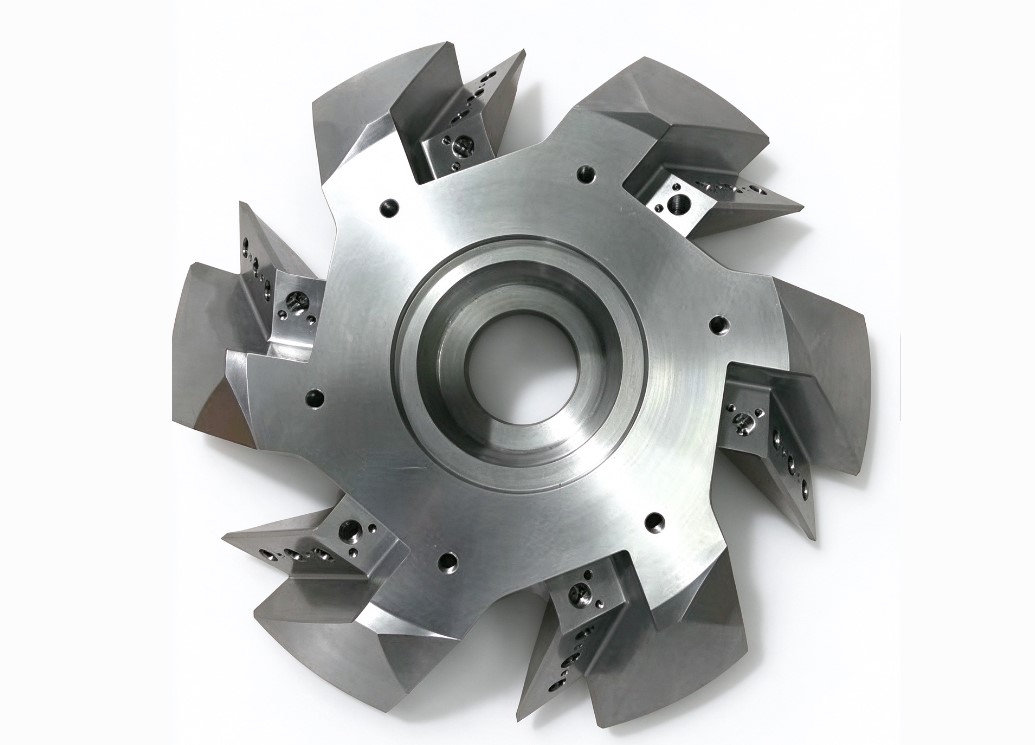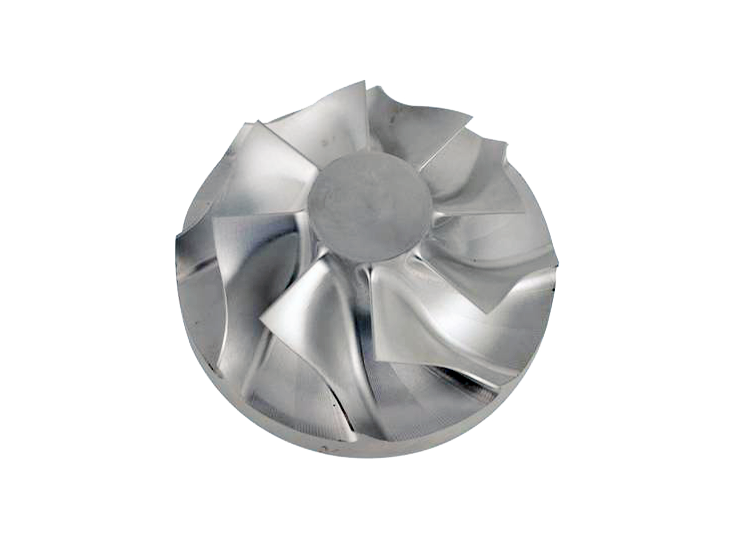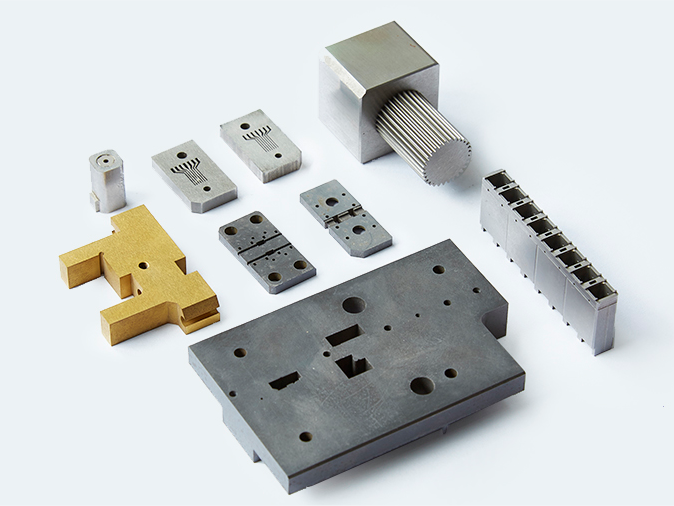
When a CNC part has complex surfaces, multiple angled features or very tight tolerances, 5-axis machining can be a very effective manufacturing solution.
But there is a common misunderstanding:
A 5-axis machine does not automatically mean a high-precision part.
The final result depends on the complete manufacturing process — machine capability, programming, workholding, tooling, material, temperature control and inspection all matter.
If you are looking for a supplier for high-precision CNC parts, here are 10 things worth considering before placing an order.
1. Does the Part Really Need 5-Axis Machining?
Not every complex-looking part needs a 5-axis machine.
A simple block with several drilled holes may be more economical on a 3-axis machining center.
5-axis machining becomes more interesting when a component has:
- Multiple angled surfaces
- Complex 3D contours
- Features on several sides
- Difficult tool access
- Tight positional relationships between surfaces
- A large number of machining setups
One major advantage is the ability to access multiple surfaces with fewer setups.
Fewer setups can help reduce:
- Workholding variation
- Datum changes
- Repositioning errors
- Setup time
- Accumulated tolerances
The goal should not be to use 5-axis machining simply because it is available.
The goal is to choose the manufacturing process that provides the right balance of accuracy, consistency, lead time and cost.
2. Machine Accuracy Is Only One Part of the Equation
A machine specification may look impressive on paper, but that does not tell the whole story.
For precision CNC machining, the actual result can also depend on:
- Machine calibration
- Thermal stability
- Tool condition
- Cutting parameters
- CAM programming
- Workholding
- Material properties
- Operator experience
- Inspection equipment
This is particularly important when a drawing contains tolerances in the micron range.
A supplier may have a high-end 5-axis machine, but the manufacturing process still needs to be properly planned and controlled.
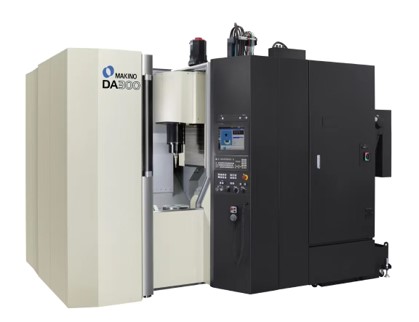
At MaxPrecisionParts, we use Makino 5-axis machining centers for complex precision components.
For suitable parts and manufacturing conditions, our machining capability can reach approximately 0.002 mm, depending on the feature, material, geometry and required process.
3. Fixturing Can Make or Break a Precision Part
One of the less visible factors in precision machining is workholding.
Even if the machine and cutting tools are extremely accurate, the result can be affected if the part moves, deforms or is incorrectly positioned during machining.
For complex components, we consider:
- Datum selection
- Clamping position
- Part deformation
- Tool access
- Machining sequence
- Thermal effects
- Number of setups
This is one reason why reducing the number of setups can be valuable.
However, fewer setups are not automatically better either. The fixturing strategy still needs to match the geometry and tolerance requirements.
4. Understand the Difference Between ±0.01 mm and ±0.002 mm
Tolerance is one of the most important parts of a CNC drawing.
For example:
±0.01 mm
and
±0.002 mm
are very different manufacturing requirements.
A tighter tolerance can affect:
- Machining time
- Tool selection
- Process stability
- Inspection requirements
- Grinding requirements
- Production cost
It is therefore useful to identify which dimensions are actually critical.
Not every dimension needs micron-level accuracy.
If every dimension on a drawing is unnecessarily tight, manufacturing cost can increase without providing additional functional value.
A good CNC machining supplier should be willing to discuss tolerances before production rather than simply quote the drawing without review.
5. Surface Finish Is More Than Appearance
Surface roughness can be a functional requirement, not just a cosmetic one.
For example, components used in:
- Motion stages
- Semiconductor equipment
- Optical systems
- Precision automation
- Mechanical assemblies
may require specific surface finishes for performance, sealing, sliding, positioning or assembly.
Depending on the material and process, MaxPrecisionParts can achieve surface finishes down to approximately Ra 0.4 μm.
But achieving a particular Ra value depends on the material, geometry, tool condition, machining strategy and finishing process.
For some components, CNC milling is enough.
For others, grinding, polishing or EDM may be more appropriate.
6. Sometimes 5-Axis CNC and EDM Should Be Used Together
5-axis milling is powerful, but it cannot efficiently produce every possible geometry.
Some features may be better suited to EDM.
Typical examples include:
- Narrow slots
- Intricate profiles
- Deep internal features
- Difficult-to-access geometries
- Certain hardened materials
This is why having multiple manufacturing technologies under one production system can be useful.
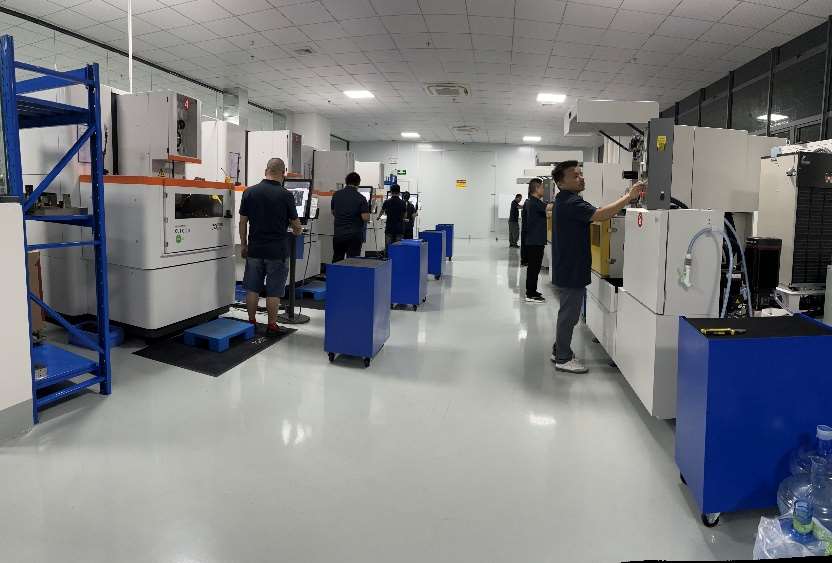
Our capabilities include GF EDM and wire EDM, allowing us to combine CNC machining and EDM when required.
A component may therefore follow a process such as:
5-axis milling → EDM → grinding → inspection
rather than trying to manufacture everything using one technology.
7. Inspection Should Be Considered Before Machining
Inspection is not simply the final step after machining.
For high-precision components, the inspection method should be considered during process planning.
Depending on the drawing, critical dimensions may include:
- Flatness
- Parallelism
- Perpendicularity
- Concentricity
- True position
- Hole location
- Profile
- Surface roughness
For precision projects, we can support full-dimensional inspection and CMM measurement according to the customer’s requirements.
This is particularly important when the component will later be assembled with other precision components.
A part can meet its individual dimensional requirements and still cause assembly problems if the relationships between features are not properly controlled.
8. Material Selection Matters
Different materials behave differently during machining.
Aluminum, stainless steel, titanium, tool steel, brass and engineering plastics all require different machining strategies.
Material characteristics can influence:
- Cutting speed
- Tool wear
- Heat generation
- Surface finish
- Dimensional stability
- Deformation
- Machining time
For example, thin-wall aluminum components can behave very differently from rigid steel components when tight tolerances are required.
If your part has difficult material or thin-wall geometry, it is worth discussing the application with the machining supplier before production.
9. Design for Manufacturability Can Save More Money Than Changing Suppliers
Sometimes the biggest cost reduction does not come from finding a cheaper machine shop.
It comes from changing the design slightly.
For example, engineers can sometimes reduce manufacturing difficulty by:
- Increasing an internal corner radius
- Improving tool access
- Reducing unnecessary deep pockets
- Reviewing unnecessarily tight tolerances
- Designing better datum references
- Reducing the number of setups
- Considering inspection access
A small change in a CAD model can sometimes eliminate an additional machining or EDM operation.
This is particularly important for prototypes and new product development.
10. Ask About Lead Time and Process Planning
For engineering teams, machining price is only one part of the purchasing decision.
Lead time can also be critical.
A supplier may quote a low price but require several weeks longer to complete the order.
For automation and semiconductor equipment projects, this can affect the entire assembly schedule.
At MaxPrecisionParts, our typical lead time for suitable precision CNC projects is around 2–3 weeks, depending on material, quantity, surface treatment, inspection requirements and component complexity.
For urgent projects, the actual lead time should always be confirmed after reviewing the drawings.
What Should You Send to a CNC Machining Supplier?
If you want an accurate quotation, providing more information at the beginning can save time.
Ideally, send:
- 3D STEP file
- 2D engineering drawing
- Material specification
- Surface treatment requirements
- Required quantity
- Critical tolerances
- Inspection requirements
- Target delivery date
If you have a difficult component, it is also useful to identify the most critical features.
For example:
Flatness: 0.002 mm
Parallelism: 0.003 mm
Surface finish: Ra 0.4 μm
Material: SUS304
Quantity: 20 pcs
This gives the machining supplier a much clearer understanding of the project.
When Should You Consider a 5-Axis CNC Supplier?
A 5-axis machining supplier can be worth considering when your parts have:
- Complex 3D geometry
- Multiple angled surfaces
- Tight positional tolerances
- Difficult tool access
- Multiple machining orientations
- Low-volume or prototype requirements
- High inspection requirements
For high-mix, low-volume production, process flexibility can be particularly important.
Instead of building a dedicated production line for every component, a capable 5-axis machining supplier can often handle a wide range of complex parts with relatively low setup requirements.
Our Precision CNC Machining Capabilities
At MaxPrecisionParts, we focus on complex and high-precision CNC machined components.
Our capabilities include:
5-Axis CNC Machining
Makino 5-axis machining centers for complex components and multi-face machining.
EDM & Wire EDM
GF EDM and wire EDM equipment for precision profiles, narrow features and geometries that are difficult to machine conventionally.
Precision Grinding
Grinding and finishing for applications requiring tighter dimensional and surface requirements.
Inspection
CMM and full-dimensional inspection according to customer drawings and project requirements.
For suitable components, our capability can reach approximately 0.002 mm dimensional accuracy and Ra 0.4 μm surface finish.
Typical lead time is around 2–3 weeks, depending on the project.
We support prototype, low-volume and repeat production for customers in:
- Semiconductor equipment
- Industrial automation
- Robotics
- Motion systems
- Optical equipment
- Precision machinery
Have a Difficult 5-Axis Part?
If you have a component that is difficult to manufacture using conventional 3-axis machining, we would be happy to review it.
Send us your STEP file, 2D drawing, material and quantity.
We can review the geometry and determine whether the most suitable process is:
5-axis CNC machining, EDM, wire EDM, grinding — or a combination of several processes.
The objective is simple:
Make the part accurately, consistently and in a practical way.
Frequently Asked Questions
What is 5-axis CNC machining?
5-axis CNC machining allows the cutting tool and/or workpiece to move along multiple axes, providing access to complex surfaces and features that may require multiple setups on a conventional 3-axis machine.
Is 5-axis CNC machining more accurate than 3-axis machining?
Not automatically. Accuracy depends on the machine, setup, tooling, programming, material, process control and inspection. The main advantage of 5-axis machining is often improved access and the ability to reduce the number of setups.
What tolerance can CNC machining achieve?
The achievable tolerance depends on the material, geometry, machine, process and inspection requirements. For suitable precision components, MaxPrecisionParts can achieve approximately 0.002 mm on selected features.
When should I use EDM instead of CNC milling?
EDM can be useful for narrow slots, intricate profiles, deep features and geometries that are difficult or inefficient to produce with conventional cutting tools.
How fast can a 5-axis CNC part be produced?
Lead time depends on material, geometry, quantity, surface treatment and inspection requirements. Typical projects at MaxPrecisionParts take around 2–3 weeks.
Can you inspect every dimension?
Yes. Full-dimensional inspection and CMM inspection can be arranged according to the drawing and quality requirements.
Do you provide CNC machining prototypes?
Yes. We support prototype, low-volume and repeat production for complex precision components.