Meta Description: Looking for a CNC machining partner for semiconductor parts? Learn what tolerances, certifications, and capabilities matter most — and how to evaluate a precision machining supplier before placing your first order.
The semiconductor industry demands a level of precision that few manufacturing sectors can match. When a single micron of deviation can compromise an entire wafer processing cycle, choosing the right CNC machining partner is not a procurement decision — it is a production-critical one.
This guide walks through the key factors that separate a reliable precision CNC machining supplier from a generic machine shop, with practical checkpoints you can use during your vendor evaluation process.
Why Semiconductor Parts Require a Different Class of CNC Machining
Semiconductor fabrication equipment — from lithography systems and etching chambers to wafer handling robots and inspection platforms — operates in environments where failure is not an option. Parts used in these systems face:
- Ultra-clean environments: Components must be free of particulate contamination, requiring mirror-finish surfaces and cleanroom-compatible materials.
- Extreme thermal stability: Vacuum chambers and process modules cycle through rapid temperature changes, demanding materials and tolerances that hold under thermal stress.
- Sub-micron alignment: Optical mounting brackets, stage components, and sensor housings require flatness and parallelism within 0.001mm to maintain system calibration.
These requirements mean your CNC machining supplier must deliver more than dimensional accuracy — they must understand the application context behind every drawing
7 Criteria to Evaluate a CNC Machining Supplier for Semiconductor Parts
1. Tolerance Capability — Not Just on Paper
Many shops advertise ±0.01mm. For semiconductor-grade parts, you need a partner who consistently holds ±0.001mm to ±0.002mm on production runs, not just first articles.
What to ask: Request CMM inspection reports from recent production batches, not just prototypes. Consistency across 50+ pieces tells you more than a single-sample report.
2. Equipment Quality — Imported vs. Domestic Matters
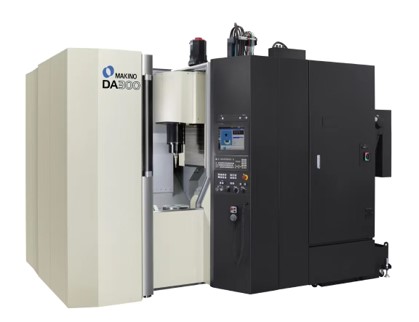
The machine tools themselves set the ceiling on what is achievable. 5-axis CNC machining centers from manufacturers like GF Machining Solutions, Makino, and DMG MORI deliver the rigidity and thermal compensation needed for tight-tolerance work.
At [1], we operate 600+ CNC machines including imported Swiss GF equipment, 3-axis to 5-axis machining centers, large horizontal systems, and CNC lathes supporting parts up to 1.2 meters.
3. Surface Finish Capability
Semiconductor components frequently require:
| Surface Finish | Application |
| Ra 0.8 | General mechanical parts, housings |
| Ra 0.4 | Guide rails, sliding surfaces |
| Ra 0.2 or better | Optical mounts, vacuum sealing surfaces |
| Mirror finish | Cleanroom components, wafer-contact surfaces |
A serious precision grinding and polishing capability — with measurable Ra values on every shipment — is non-negotiable for semiconductor work.
4. Wire EDM for Complex Internal Geometries
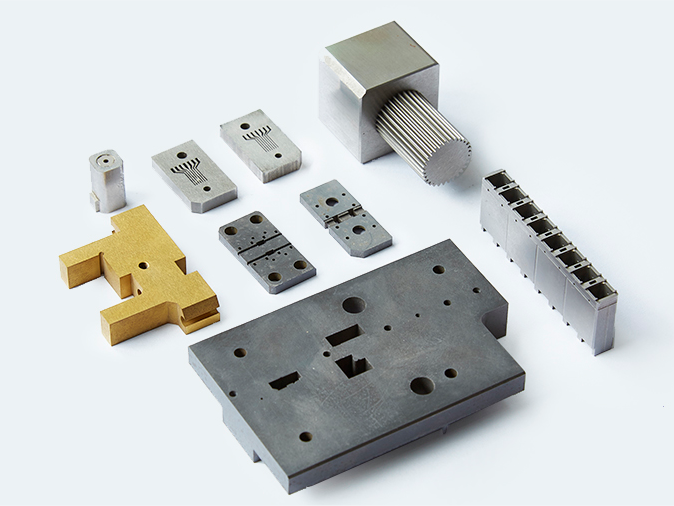
Many semiconductor components feature internal channels, micro-slots, and complex profiles that conventional milling cannot reach. Wire EDM machining with tolerances to ±0.001mm enables these features without compromising surface integrity.
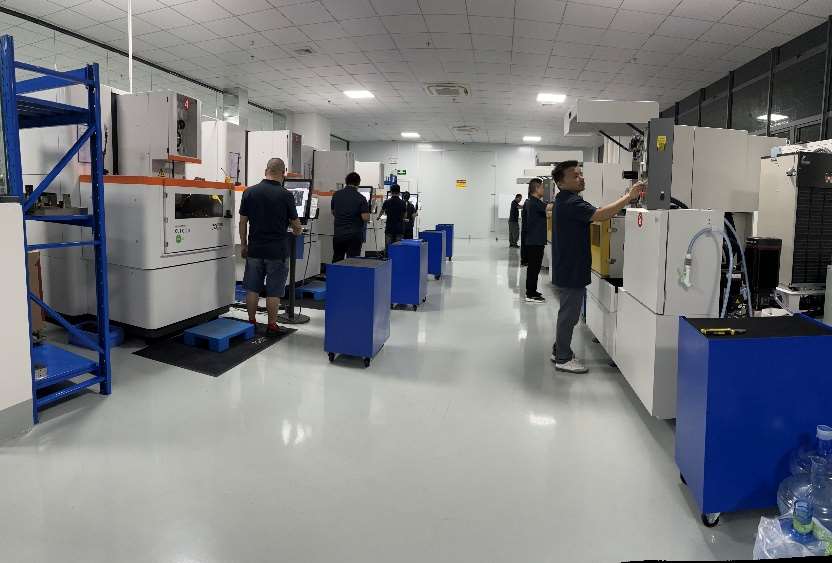
We operate 27 advanced EDM and wire cutting machines, including imported GF equipment from Switzerland, specifically configured for high-precision semiconductor components and precision tooling.
5. Material Expertise
Semiconductor equipment uses a specific range of materials:
- Aluminum alloys (6061, 7075) — lightweight structural components, chambers
- Stainless steel (304, 316L) — vacuum-compatible parts, corrosion resistance
- Titanium — high-strength, low-outgassing applications
- Engineering plastics (PEEK, PTFE, PPS) — insulators, non-metallic guides
- Copper and copper alloys — thermal management components
Your CNC machining partner should have documented experience with your specific material, not just general metalworking capability.
6. Quality Systems and Certifications
ISO 9001:2015 is the baseline. For semiconductor work, also look for:
- Full CMM inspection with dimensional reports on every batch
- Traceable material certificates
- Documented process control (first article inspection, in-process checks, final inspection)
- Environmental management certification (ISO 14001)
7. Lead Time and Responsiveness
In semiconductor manufacturing, equipment downtime costs thousands per hour. Your machining partner must deliver reliably — and quickly when needed.
We offer lead times as fast as 15 days for standard orders and expedited turnaround for urgent replacement parts, with a dedicated engineering contact for each customer.
Common Semiconductor Parts We Machine
| Part Category | Examples | Typical Tolerance |
| Vacuum chamber components | Flanges, ports, sealing surfaces | ±0.002mm |
| Wafer handling parts | End effectors, gripper fingers, lift pins | ±0.001mm |
| Optical mounting brackets | Lens holders, mirror mounts, alignment stages | ±0.001mm |
| Process module parts | Gas distribution plates, showerheads, susceptors | ±0.002mm |
| Stage and positioning parts | Linear guide mounts, encoder housings | ±0.0015mm |
| Cleanroom fixtures | Tool holders, transfer arms, cassette parts | ±0.002mm |
How to Get Started: From Drawing to Delivered Parts
Working with MaxPrecisionParts follows a straightforward four-step process:
- Upload your drawings — Send STEP, STL, PDF, or IGS files to our engineering team
- DFM review and quote — We provide detailed design-for-manufacturing feedback and a competitive quote within 24 hours
- Production with full inspection — Every batch undergoes CMM dimensional inspection with reports included
- Delivery and ongoing support — Parts carefully packed and shipped with full tracking; your dedicated contact remains available for repeat orders and modifications
Why Global Companies Choose CNC Machining in China
The cost advantage of CNC machining in China is well known — typically 30–50% less than equivalent work in Europe or North America. But for semiconductor parts, cost savings only matter if quality holds.
The key is choosing an ISO-certified CNC shop with:
- Imported precision equipment (not just domestic machines)
- English-speaking engineering teams for direct technical communication
- Proven track record with international semiconductor customers
- Documented quality processes, not just verbal assurances
Dongguan, where MaxPrecisionParts is headquartered, is recognized as one of the world’s leading precision manufacturing hubs, with a mature supply chain for materials, tooling, and surface treatment that supports fast turnaround.
About MaxPrecisionParts
Established 2018 | Dongguan, China | ISO 9001:2015 Certified
- 5,000㎡ facility with 80+ engineers
- 70+ CNC machines including Swiss GF 5-axis centers
- 10 wire EDM machines with ±0.001mm capability
- 6 precision grinding machines with mirror-finish capability
- 15 days finished time
Ready to discuss your next project?
Send your drawings to: tony@maxprecisionparts.com