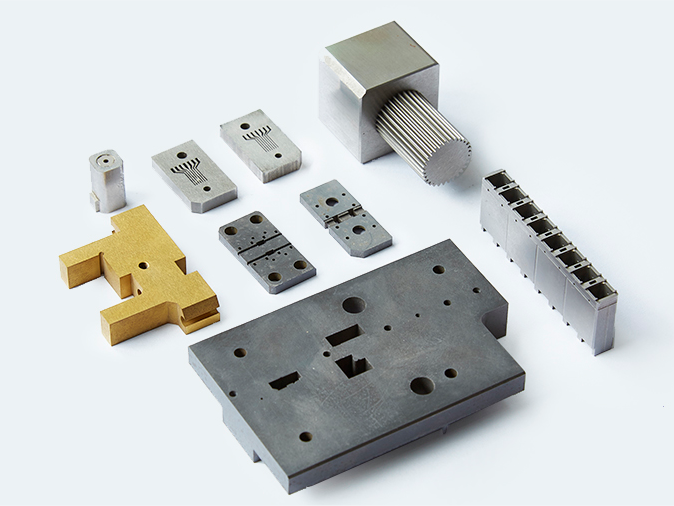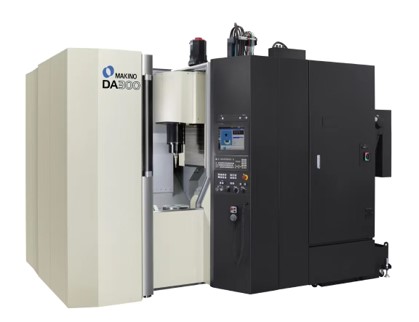
If your part is a plain block with pockets and holes on one or two faces, a standard 3-axis mill will do the job. Things get less clear once the drawing shows angled features, deep cavities, or tolerances that tie together surfaces on several sides of the part.
So which one is better? It depends on the part, and this article explains how we usually make that call.
What CNC milling covers
In CNC milling, a rotating cutter removes material along a programmed toolpath. Most shops run 3-axis machines for everyday work, and many also have 4-axis setups with a rotary table.
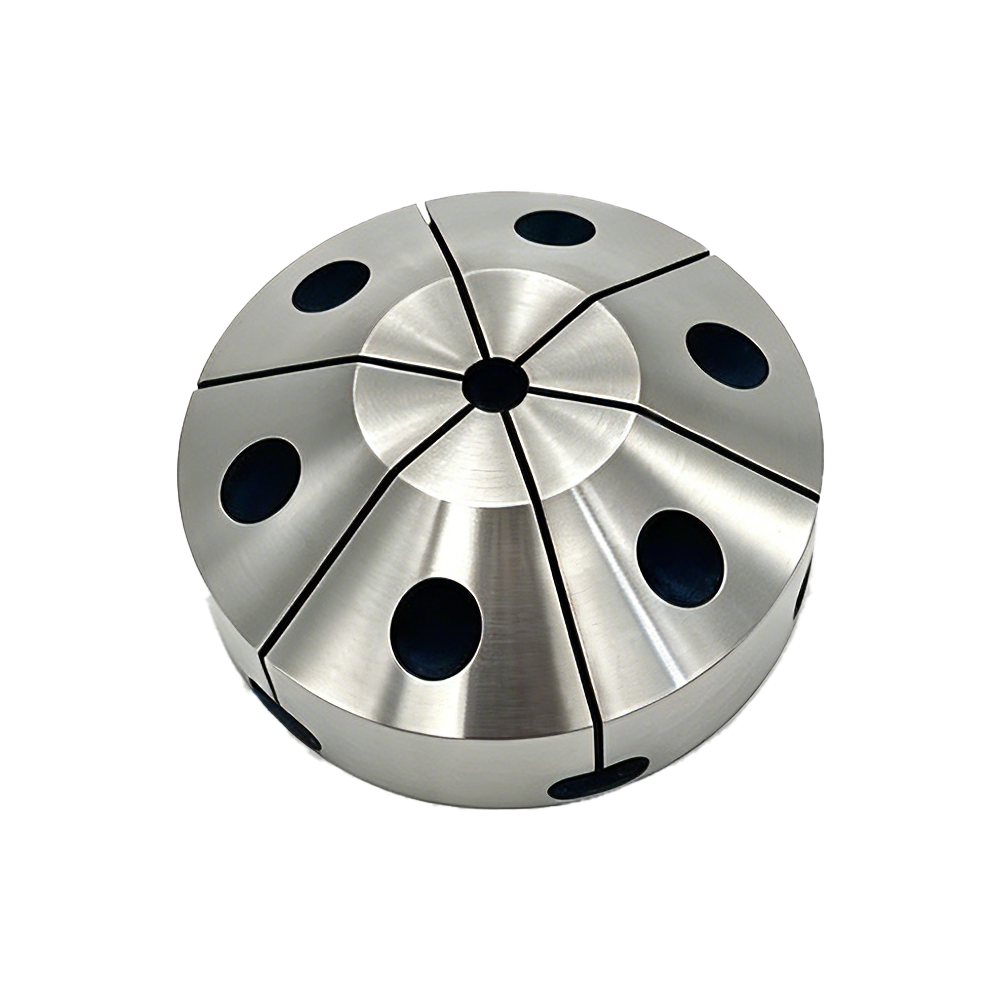
For a large share of parts, 3-axis is the sensible choice. Brackets, housings, fixtures, jigs, plates, and general machine components in aluminum, steel, or stainless are all routine work for it. If a 3-axis machine can hold the tolerance without much fuss, moving the job to a 5-axis machine just adds cost.
What 5-axis machining changes
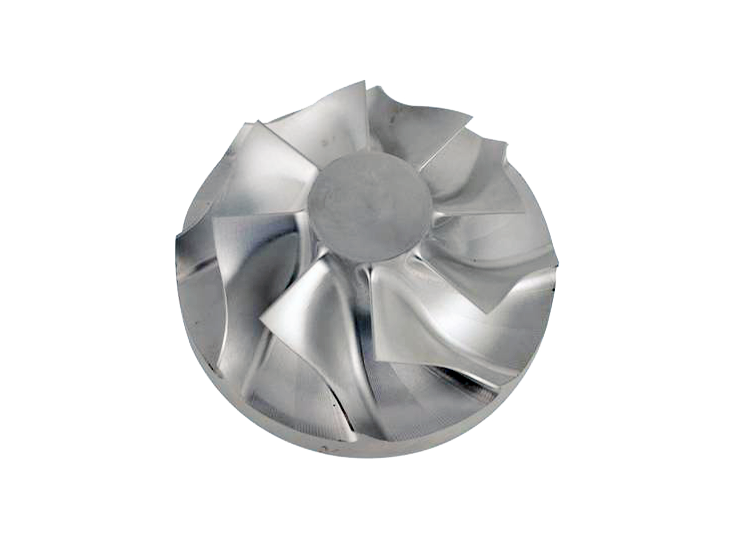
A 5-axis machine can tilt or rotate the tool or the workpiece, so the cutter can reach the part from many directions in one clamping. Impellers, blades, medical components, aerospace parts, and motion-stage components are typical candidates.
The number of axes is not really the point. What matters is that you can reach awkward features without unclamping the part, and that you keep a better handle on the process while doing so.
Side-by-side comparison
| Feature | Standard CNC milling | 5-axis machining |
|---|---|---|
| Part complexity | Simple to medium | Medium to very complex |
| Setups | Usually more | Often fewer |
| Angled features | Limited | Handled well |
| Curved surfaces | Possible | Better suited |
| Repositioning | Frequent | Reduced |
| Programming | Simpler | More demanding |
| Machine cost | Lower | Higher |
Where 5-axis really helps
Fewer setups. On a 3-axis machine, a part with features on five faces may need to be unclamped and re-fixtured several times. Each re-clamp introduces a small datum shift, and those shifts add up. Finish the part in one or two setups and the relationship between features is much easier to hold.On one semiconductor bracket we went from 5 setups to 2, and position error between the two bores dropped from ±0.03 mm to ±0.005 mm
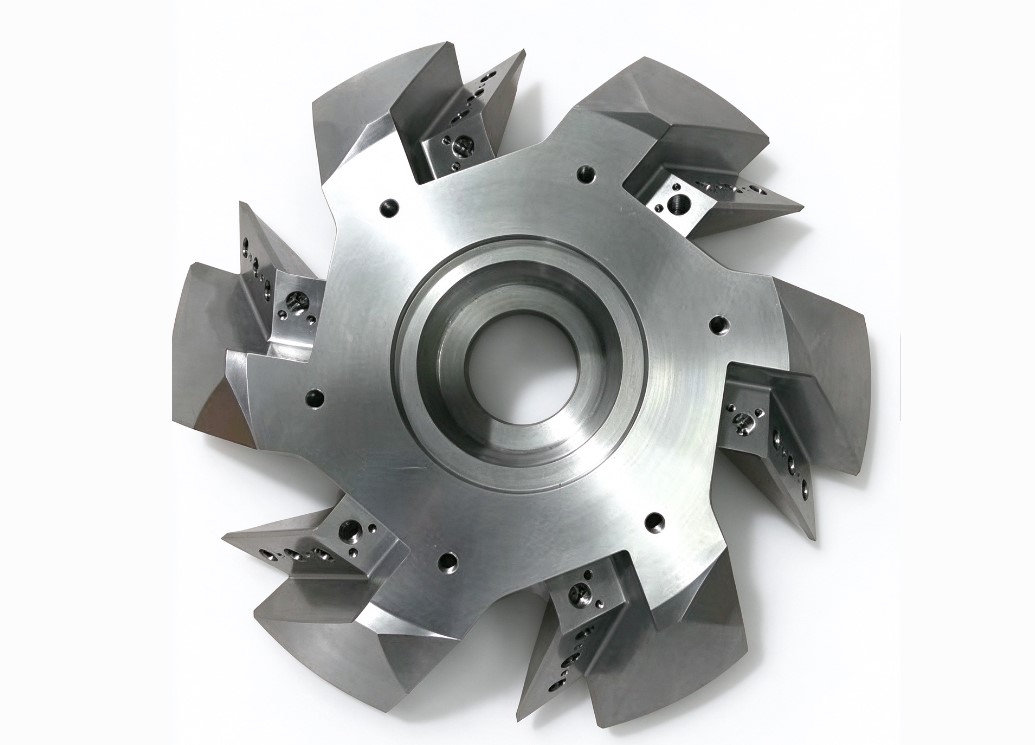
Access to difficult features. Angled holes, sloped faces, deep pockets, and undercut-type geometry are all awkward on 3-axis. Tilting the tool lets you use a shorter, stiffer cutter, which usually means less chatter and better results in deep areas.
Surface finish. Tilting the tool keeps the cutting edge in a better contact position and avoids the poor cutting conditions you get at the tip of a ball-nose cutter. If the drawing calls for Ra 0.8 μm or Ra 0.4 μm, though, 5-axis alone won’t get you there. Tool choice, cutting parameters, machine rigidity, and the finishing strategy matter just as much.
Tight positional tolerances. When flatness, parallelism, perpendicularity, position, and concentricity all have to relate to each other, fewer setups make life easier. What you can actually achieve still depends on the machine, material, geometry, tooling, programming, and inspection. We verify critical features on a CMM rather than assuming the machine held them.
When 5-axis is the wrong answer
A 5-axis machine can make almost anything a 3-axis machine can. That doesn’t mean it should. For a simple aluminum bracket with features on one or two faces, 5-axis programming and machine time can cost more than the job justifies.
The question worth asking is not “can this be made on a 5-axis machine?” but “does 5-axis give a real advantage on this part?”
Signs your part may need 5-axis
- Multiple angled surfaces, curved profiles, or hard-to-reach features
- Machining required on several faces
- Tight positional relationships between features on different faces
- Demanding surface finish on complex surfaces
- Prototypes or small batches, where saving setups and fixtures can offset the higher hourly rate
Industries where we see it most
Semiconductor equipment: aluminum and stainless components with tight tolerances and strict surface requirements.
Automation: custom brackets, fixtures, and structural parts, usually needing accurate mating features.
Robotics: lightweight structures with angled faces and precise interfaces.
Aerospace: complex geometries that are inefficient to cut on 3-axis.
Optical and motion systems: parts where positioning accuracy, flatness, and finish all count.
Thinking about cost properly
A 5-axis machine costs more, and programming and setup take more skill. But the hourly rate isn’t the whole picture. Total cost also depends on:
- Number of setups and fixtures
- Machining time and tool changes
- Inspection requirements
- Scrap risk
- Labor
- Batch size and material
On a complex part, cutting the number of setups can lower the overall cost even at a higher hourly rate. On a simple part, standard milling usually stays cheaper. For a batch of 20 pieces of Al6061 parts, we compared both routes and found 5 axis could save 5 hours at least.
So, which one?
Simple and moderately complex parts are usually best served by conventional CNC milling: accurate, economical, and fast to program. Parts with several machined faces, angled features, and tight positional requirements are where 5-axis earns its cost.
At MaxPrecisionParts, we machine parts for automation, robotics, semiconductor equipment, and other industrial uses. Our capabilities include 5-axis machining, CNC milling, CNC turning, wire EDM, and precision grinding, backed by dimensional inspection and CMM measurement.
If you have a part you’re unsure how to machine, send us the drawing or 3D model. We’ll look at the geometry and tell you which process makes sense, even if the answer is “a 3-axis machine is fine.”